

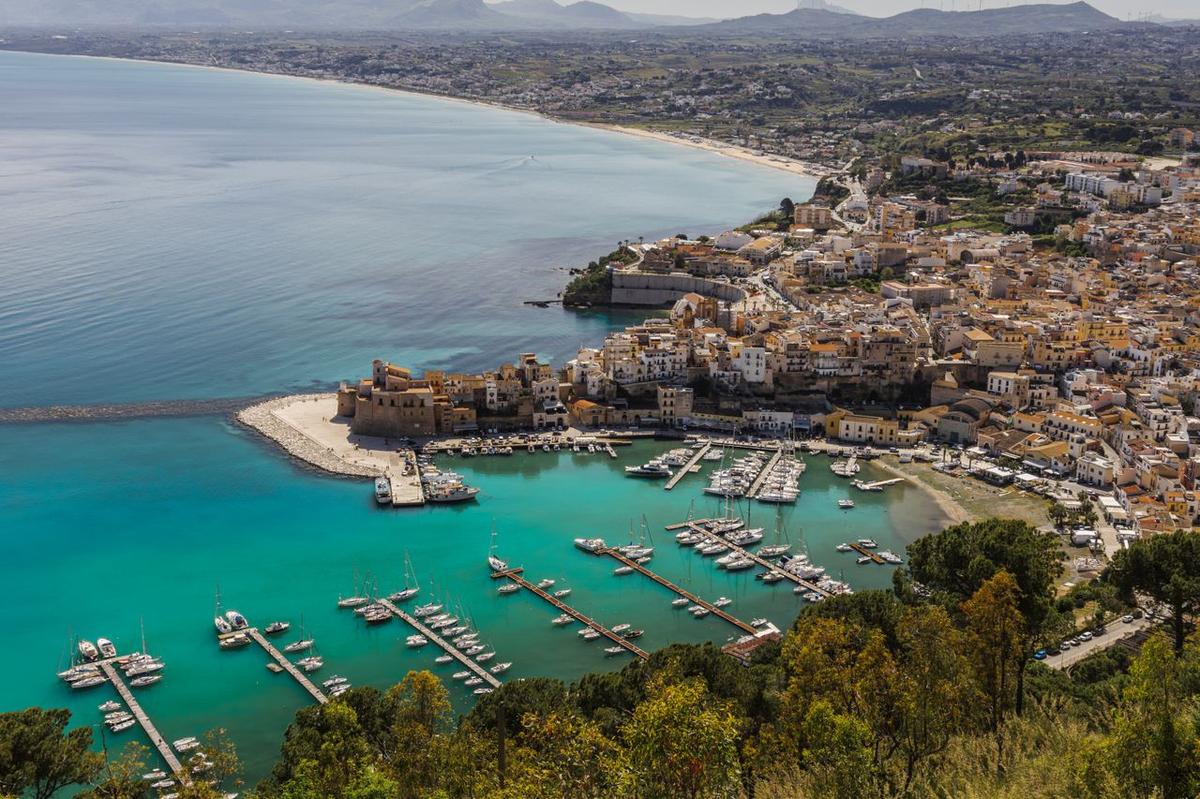
Sicily has long been one of Italy’s most compelling destinations. Its history, its food, and its light all play a part. So does a landscape ranging from volcanic coastlines to baroque hilltop towns. In recent years, it has also become one of the most active markets for international property buyers. Demand keeps growing from across Europe, North America and beyond.
Buying property in Sicily as a foreigner follows the same legal framework as the rest of Italy. A few local characteristics are worth knowing in advance, though. This guide covers the essentials.
1. Why Sicily Attracts International Buyers
The reasons are straightforward. Property prices in Sicily remain significantly lower than in more established Italian markets. A well-located apartment in a Sicilian baroque town can cost a fraction of a comparable property in Tuscany or the Italian lakes. The same applies to a rural property with land. The island also qualifies for the 7% flat tax regime for foreign retirees. This is one of the most attractive fiscal incentives available to those relocating to Italy from abroad.
Noto and Caltagirone rank among the most sought-after areas for international buyers, both listed as UNESCO World Heritage Sites for their extraordinary baroque architecture. Taormina on the east coast, the area around Syracuse (Siracusa), and the Palermo hinterland also attract strong interest. Each area has its own character and its own price range.
2. What to Buy: Property Types and Prices
Sicily offers a wide range of property types. Historic apartments in town centres, particularly in the baroque towns of the south-east, attract buyers looking for a manageable, walkable base. Rural properties, such as case coloniche, baglio complexes, and smaller farmhouses, appeal to those seeking more space and land. Coastal villas and seafront apartments command premium prices, particularly in areas with established tourist infrastructure.
Prices vary considerably. In many inland towns, you can find habitable properties well below €100,000. In sought-after locations like Noto, Taormina or the coastline around Syracuse, prices run higher and keep rising. Sicily has seen a notable increase in demand from international buyers over the past two to three years. This has begun to push prices upward in the most popular areas.
3. Key Legal Considerations
The legal framework for buying property in Sicily matches the rest of Italy: purchase proposal, preliminary contract (compromesso), legal due diligence, and final deed before a notary. That said, a few specific points deserve attention.
Building compliance matters first. Sicily has a significant history of unauthorised building works, particularly in rural areas and on the coast. Verifying that all structures are properly authorised and match the cadastral plans forms a critical part of due diligence. You can regularise some irregularities; others you cannot.
Coastal restrictions apply near the shoreline. Properties near the Sicilian coastline may carry specific environmental and planning constraints (vincoli paesaggistici and vincoli costieri). These can affect what modifications are permitted, and whether certain structures were lawfully built in the first place.
Title history deserves careful examination too. Properties that have passed through several generations of the same Sicilian family, which is common here, may have complex inheritance histories. Verify that all heirs have consented to the sale, and that no outstanding succession issues remain.
The 1 euro house schemes are worth a special mention. Several Sicilian municipalities have run programmes selling abandoned properties for symbolic prices. These can represent genuine opportunities, but they come with significant obligations, including mandatory renovation within fixed deadlines and financial guarantees. Get legal advice before entering any such scheme.
4. The 7% Flat Tax: A Key Incentive for Retirees
Sicily is one of the regions that qualifies for Italy’s 7% flat tax regime for foreign retirees. Under this regime, individuals who transfer their tax residence to a qualifying Sicilian municipality, generally those with fewer than 30,000 inhabitants, can pay a flat 7% tax on all their foreign-source income for up to ten years.
This makes Sicily particularly attractive for retirees from countries with strong currencies or significant pension income. Affordable property prices combined with a highly favourable tax regime create a powerful draw. Our dedicated article on the 7% flat tax for foreign retirees covers how the regime works and who qualifies, in full detail.
5. Costs and Taxes
The main costs of purchasing property in Sicily match the rest of Italy:
| Cost | Non-Primary Residence | Primary Residence |
|---|---|---|
| Registration tax | 9% of cadastral value | 2% (with agevolazione prima casa) |
| Notary fees | 1–2% of purchase price | 1–2% of purchase price |
| Legal fees | Variable | Variable |
| Estate agent commission | Payable by both parties if an agent is involved | Payable by both parties if an agent is involved |
For properties requiring renovation, budget carefully for works costs. Renovation in Sicily can prove more complex than expected. Logistics, the availability of skilled craftspeople, and the time required for permits all need realistic planning.
How We Can Help
Magaraggia Law Firm assists international buyers at every stage of the Italian property transaction, including in Sicily. Our role is not limited to reviewing documents. We manage the entire process on your behalf, from the initial legal due diligence on the property, to negotiating with the seller and the estate agent, to coordinating with the notary through to completion. Our objective is to protect your interests at every step and to eliminate legal and financial risk as far as possible. We advise in English, French and Spanish, and we work across all of Italy.
If you are considering buying property in Sicily, contact us for a free initial consultation. We can help you understand the process before you commit:
info@studiolegalemagaraggia.it
+39 328 071 0278