

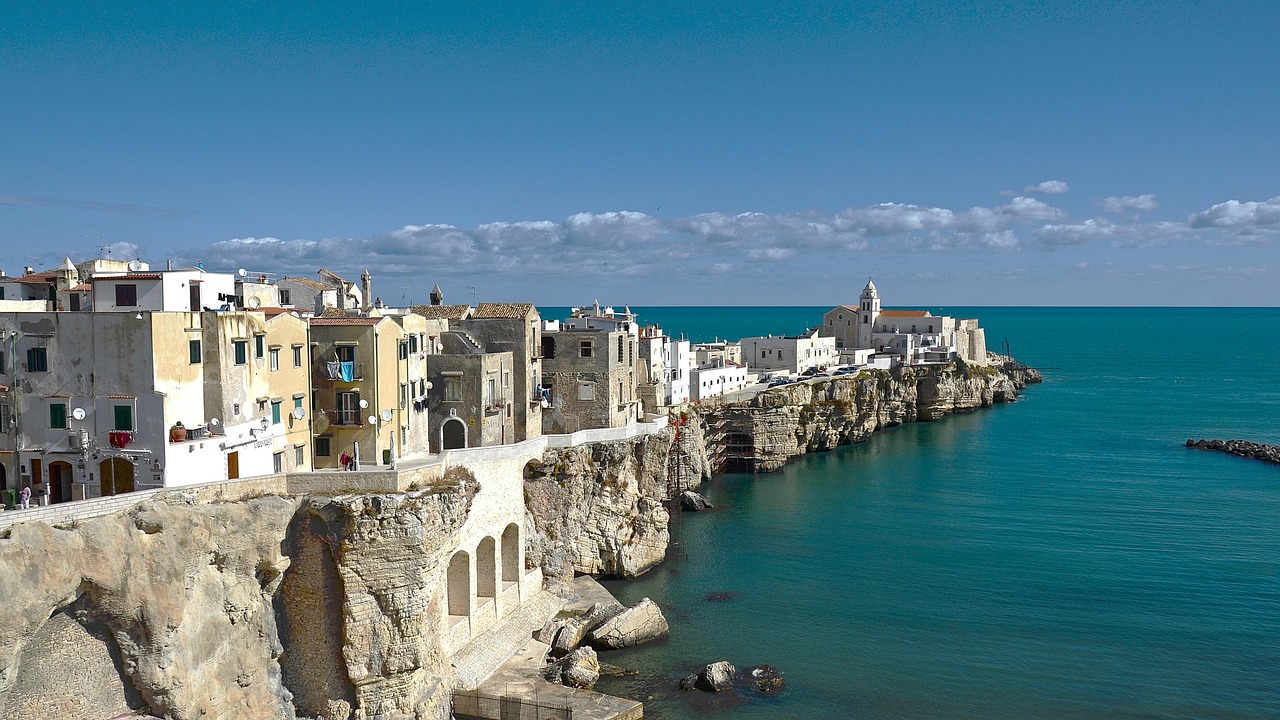
Italy has long been one of the world’s most attractive destinations for retirees. Its climate, culture, food and quality of life all play a part. In recent years, Italy added a powerful fiscal incentive to that list. Pensioners who relocate to qualifying municipalities in the south can pay a flat 7% tax on all foreign-source income.
The 2019 Budget Law introduced this regime, governed by Article 24-ter of the Italian Income Tax Code (TUIR). It has become one of the most competitive retirement tax arrangements in Europe. As of April 2026, it became significantly more accessible.
1. The April 2026 Expansion: A Significant Update
On 7 April 2026, Law No. 34 of 11 March 2026 came into effect. It raised the population threshold for eligible municipalities from 20,000 to 30,000 inhabitants. This change adds 74 new municipalities to the list of qualifying locations. In pure numbers, that is only a 3% expansion. But the newly eligible towns matter far more for their quality and accessibility.
Newly eligible municipalities include established international destinations. Ostuni, Manduria, and San Giovanni Rotondo in Puglia now qualify, as does Pompei in Campania. These towns already have international communities and good infrastructure. They hold strong appeal for European retirees and for members of the Italian diaspora returning from abroad.
If you ruled out the regime before because your preferred location did not qualify, check the current list again. Towns that were ineligible even a few months ago may now qualify.
2. How the Regime Works
The 7% flat tax regime works as a substitute tax. It replaces Italian income tax (IRPEF) and all regional and municipal income surcharges on foreign-source income. Ordinary progressive tax rates can reach 43% at the top. Under this regime, the taxpayer pays a flat 7% on all income received from abroad instead, regardless of the amount.
This covers several income types. Foreign pension income of all kinds counts, including state pensions, occupational pensions, and private pension funds. Investment income from foreign sources counts too, such as dividends, interest, and capital gains. Rental income from properties held abroad also qualifies. So does any other income of foreign origin. This includes, as confirmed by the Italian Revenue Agency (ruling n. 292/2025), proceeds from the liquidation of foreign companies.
Italian-source income works differently. This includes rental income from Italian property. The flat tax does not cover it; ordinary Italian taxation still applies. This is an important distinction for buyers who plan to rent out their Italian property.
The regime also exempts foreign assets from Italy’s wealth taxes. This covers IVAFE, on foreign financial assets, and IVIE, on foreign real estate. For retirees with substantial assets held abroad, this is a further significant benefit.
3. Eligibility Requirements
To access the regime, you must meet all of the following conditions. You must receive pension income from a foreign source. The regime does not cover individuals whose income comes entirely from employment or business activities, though other Italian regimes exist for those categories. You must also not have been an Italian tax resident for at least five of the six years before the year you first apply the regime.
You must transfer your tax residence to a qualifying municipality too, by registering with the local Anagrafe. The municipality must sit in one of the designated Southern Italian regions. These are Sicily, Calabria, Sardinia, Campania, Basilicata, Abruzzo, Molise, or Puglia. Municipalities affected by the 2009 L’Aquila earthquake and the 2016 to 2017 Central Italy earthquakes also qualify.
The municipality itself must have no more than 30,000 inhabitants. This is based on ISTAT data as at 1 January of the year before the relevant tax year; the threshold rose to 30,000 from 7 April 2026. Finally, you must come from a country with an administrative cooperation agreement with Italy for tax information exchange. This includes most EU member states, the United States, Canada, the United Kingdom, Australia, and most other developed countries.
4. Duration, Amount and How to Apply
The regime lasts for a maximum of ten consecutive years. This period starts from the first tax year in which you elect it. Once the ten years expire, you return to ordinary Italian taxation on worldwide income.
You pay the substitute tax annually as part of your Italian income tax return. Italy calculates the amount at 7% of all foreign-source income received during the year. There is no cap and no minimum; the 7% rate applies to the full amount, whatever it is.
To elect the regime, follow three steps. First, establish Italian tax residence in a qualifying municipality. Do this by registering with the Anagrafe before the end of the relevant tax year. Second, elect the regime in your Italian income tax return for that year, in the return filed the following year. Third, pay the substitute tax by the standard deadline for income tax payments.
You can revoke the election at any time. The regime also lapses automatically in two cases: if you move to a non-qualifying municipality, or if you fail to pay the substitute tax in a given year.
5. Interaction with Home Country Taxes: A Critical Point
The 7% flat tax is an Italian tax regime. Whether it works well alongside your home country tax obligations depends on that country’s own rules. It also depends on the applicable double taxation treaty.
For some nationalities, particularly US citizens and UK nationals, the interaction requires careful analysis. The United States taxes its citizens on worldwide income regardless of where they live. The US-Italy tax treaty and the foreign tax credit mechanism can help mitigate double taxation. Still, the interaction is complex and needs specific advice.
UK nationals who become Italian tax residents may cease to be UK tax resident. This can affect UK pension taxation, capital gains, and inheritance. EU nationals moving from countries with high income tax rates often find the 7% regime produces significant savings, with a relatively straightforward treaty interaction.
In every case, get coordinated advice from professionals in both Italy and your home country before making the move. The regime itself is straightforward in its Italian mechanics. But its overall financial impact depends on the full cross-border picture.
6. Choosing the Right Municipality
The choice of municipality matters both for eligibility and for quality of life. Verify eligibility against current ISTAT population data at the time of registration. Population figures change between census periods. A municipality that qualified in a previous year may not qualify in the current year, and vice versa.
The relevant ISTAT figure is that of 1 January of the year before the tax year. If you register in 2026 to access the regime from tax year 2026, the relevant figure is 1 January 2025. Once you register, your eligibility rests on the population figure at the time of registration. Later population changes do not affect it, provided you do not move.
The qualifying regions offer a wide range of property types and price points. Sicily, Calabria, Sardinia, Campania, Basilicata, Abruzzo, Molise, and Puglia range from coastal villas to historic town houses in the interior. The regime is not limited to rural villages: many well-connected towns with good amenities now qualify.
7. The Link Between the Tax Regime and the Property Purchase
For many retirees, accessing the 7% regime and buying property in Italy go hand in hand. Purchasing a property in a qualifying municipality and registering there as a resident are the steps that activate the regime.
The order of events matters, though. Registering Italian residence triggers Italian tax residence from that date. Plan the timing of the move, the property purchase, and the tax election carefully. Ideally, work with coordinated legal and tax advice covering both the property transaction and the fiscal side of the relocation.
It is also worth noting a useful overlap. Registering as a resident in Italy within 18 months of the property purchase also qualifies you for the first home tax benefit (agevolazione prima casa), which reduces the purchase taxes significantly. The two incentives can work together effectively if you plan to take up residence.
How We Can Help
Magaraggia Law Firm assists international buyers and retirees at every stage of their Italian property transaction and relocation. Our role is not limited to the purchase itself. We manage the entire process on your behalf. This spans identifying and verifying qualifying municipalities, legal due diligence on the property, and coordinating with the notary through to completion and registration. Where the fiscal aspects of the relocation require specialist tax advice, we work alongside qualified Italian tax professionals. This ensures you have a complete and coordinated picture. We advise in English, French and Spanish, and we work across all of Italy.
If you are considering retiring to Italy, contact us for a free initial consultation. We can help you understand whether the 7% regime applies to your situation:
info@studiolegalemagaraggia.it
+39 328 071 0278