

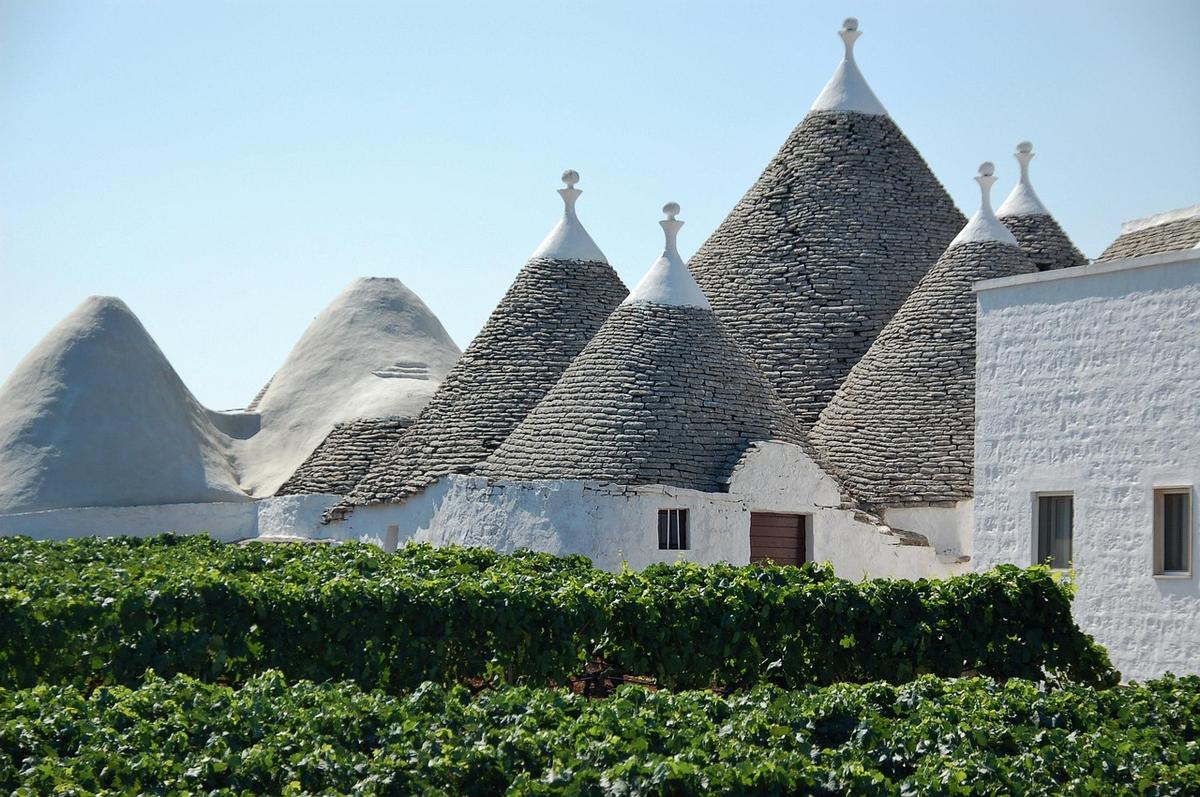
Buying a masseria in Puglia captures the imagination of international buyers like few other purchases in Italy. These historic farmhouses were built over centuries as self-sufficient agricultural estates. Ancient olive groves and dry-stone walls surround them. They have become one of the most sought-after property types in southern Italy. The architecture, the rural landscape, and a way of life that feels genuinely different from northern Europe make them unlike almost anything else on the market.
Buying a masseria is not like buying an apartment in a city, though. These are complex properties with their own set of legal, planning and practical considerations. Buyers need to understand these before committing to a purchase. This guide covers what you need to know.
What Is a Masseria?
The word masseria refers to a traditional Puglian farmhouse complex. It typically includes a main residential building surrounded by outbuildings, storage structures, and land. Historically, masserias were working farms producing olive oil, wine and grain. Many were built between the 16th and 19th centuries. Many have stayed in the same family for generations.
Today, masserias range widely. Some are modest rural homes in need of full restoration. Others are large estate complexes already converted into luxury residences or boutique hotels. Some retain original architectural features, including vaulted ceilings, stone floors, trulli-style conical towers, and underground cisterns. Others have been modernised to varying degrees. The range of prices, conditions and sizes is wide, and the due diligence required varies accordingly.
Most masserias sit in the countryside outside towns. Roads there may be unpaved, and distances from services often require a car. This is part of their appeal, but it is also a practical reality that buyers should factor into their planning.
Where to Buy: The Main Areas
Puglia is a long, diverse region. The character of masserias varies significantly by area. Three zones attract the most international interest.
The Valle d’Itria centres around the towns of Alberobello, Locorotondo, Cisternino and Ostuni. This is trullo country, the landscape of conical stone towers that has made Puglia famous worldwide. Masserias here often come with trulli outbuildings and sit among mature olive groves. Demand from international buyers runs high here. Prices reflect it too: the Valle d’Itria is one of the more expensive areas of Puglia for rural properties.
The Salento forms the heel of Italy’s boot, stretching from Lecce down to Santa Maria di Leuca. Masserias here tend to be larger and more agricultural in character, with more land and greater distances from the coast. Lecce, one of Italy’s finest baroque cities, serves as the main hub of the area. Prices generally run lower than in the Valle d’Itria. Buyers also find more choice at the mid-range of the market.
The Murgia and the area around Matera, just across the border in Basilicata, offer hillier, less coastal country. Masserias here often come with significant land. This area is less developed for tourism and therefore more affordable, but also more isolated.
Key Legal and Planning Considerations
Masserias are rural properties. Rural properties in Italy come with a specific set of legal complexities. Buyers must understand these before signing anything.
Agricultural land classification matters first. Italian planning rules classify many masserias as agricultural land (zona agricola). This has important implications. You generally cannot build on agricultural land for residential purposes. Any existing structures must have lawful construction and authorisation. Strict rules govern additions or extensions to existing buildings, and in some cases these may not be possible at all. Verifying the planning history of every structure matters here. This includes outbuildings, walls and any recent additions, and it forms an essential part of due diligence.
Unauthorised building works cause one of the most common issues in Puglian masseria purchases. Owners have often carried out works over the decades without proper authorisation: additional rooms, roof changes, converted outbuildings. These may not show up on the cadastral plans, but they will be visible on inspection. Under Italian law, the buyer takes on responsibility for any existing irregularities at the time of purchase. You can regularise some irregularities (sanatoria); others you cannot. Identifying them before signing is essential.
Cadastral and land registry checks also matter. A masseria often includes multiple parcels of land registered under different cadastral categories. Sometimes these span different registers or get updated at different times. You need to verify that the cadastral description matches the physical reality of the property. You also need to confirm that all structures are properly registered. This requires careful cross-referencing of land registry and cadastral records.
Water rights and wells deserve attention too. Many masserias have their own water supply: wells, cisterns, or irrigation systems. You should verify the legal status of these water sources. Some hold proper permits; others do not. In agricultural zones, water rights can become a significant issue.
Access roads are worth checking as well. The road leading to a masseria is often unpaved and may cross private land. Verify that the buyer will have a legal right of access. This right also needs proper registration, a check that buyers sometimes overlook.
Renovation and Planning Permission
Many buyers purchase a masseria with the intention of renovating it, either for personal use or to operate as an accommodation business. Several factors shape what you can and cannot do. These include the specific planning category of the land and buildings, the local municipality’s urban planning rules (PRG), and in some cases regional Puglian legislation.
As a general rule, you can carry out restoration and conservation works on existing lawfully built structures, subject to the relevant building permits. Extensions or additions to existing structures face strict limits in agricultural zones. Often a maximum percentage of the existing floor area applies. Italian law generally does not permit new buildings on agricultural land for residential purposes. Converting outbuildings or agricultural structures into residential or hospitality use may be possible, but it requires specific planning authorisation.
Obtain an independent assessment of what is and is not permissible on a specific property before making an offer. This matters particularly if renovation or conversion is central to your plans. The legal due diligence and the planning assessment should work in parallel.
Operating a Masseria as a Business
A number of international buyers purchase masserias with the intention of operating them as boutique hotels, agriturismo establishments, or wedding venues. This is a legitimate and often financially rewarding use. But it requires specific licences and authorisations that vary by municipality and by type of activity.
The agriturismo regime, in particular, has specific rules. To qualify, the property must have an active agricultural function. The hospitality activity must also remain ancillary to the farming operation. Simply converting a masseria into a hotel and calling it an agriturismo is not sufficient.
Buyers considering a commercial use should factor the licensing requirements into their planning well before purchase, not after. The due diligence process should also assess the viability of the intended business model.
Buying a Masseria in Puglia: Practical Steps
The purchase process for a masseria follows the same general steps as any Italian property transaction: purchase proposal, preliminary contract, final deed before a notary. The due diligence stage carries additional complexity, though. It must cover not just the main building, but every structure on the property, as well as the land itself.
A specialist survey is strongly advisable before signing the preliminary contract. Use a local geometra or architect familiar with rural properties and Puglian planning rules. The preliminary contract should also be carefully drafted to protect your position if due diligence reveals issues. Include clear conditions allowing withdrawal if material problems arise.
The title history deserves careful examination too. Masserias that have passed through several generations of the same family may have complex inheritance histories. Multiple heirs may hold a stake, and their consent to the sale must be verified.
Costs to Budget For
Buying a masseria in Puglia involves several costs beyond the purchase price. Beyond the purchase price, buyers should budget for several additional costs. Purchase taxes typically run at 9% of the cadastral value as registration tax for non-primary residences. The rate drops to 2% if the property will be your primary residence in Italy. Notary fees typically run 1 to 2% of the purchase price. Legal fees cover independent legal assistance throughout the transaction. Surveyor’s fees cover a specialist assessment of the property’s planning and structural condition.
Renovation costs matter too if the property requires works. Obtaining realistic estimates before purchase is essential. Renovation costs in rural Puglia can vary significantly, and the logistics of working with local contractors should not be underestimated. Finally, budget for ongoing costs too: IMU (property tax), utilities, maintenance, and, if the property sits unoccupied for periods, caretaking and management costs.
How We Can Help
If you are considering buying a masseria in Puglia, our team can guide you through every legal step. Magaraggia Law Firm has extensive experience assisting international buyers with the purchase of rural properties in Puglia, including masserias, trulli and other traditional farmhouses. Our role is not limited to reviewing documents. We manage the entire transaction on your behalf. This spans the initial legal and planning due diligence on the property, negotiating with the seller and the estate agent, and coordinating with the notary through to completion. We also work closely with trusted local surveyors and architects where a specialist assessment is needed. Our objective is to protect your interests at every step and to eliminate legal and financial risk as far as possible. We advise in English, French and Spanish, and we work across all of Italy.
If you are considering buying a masseria in Puglia, contact us for a free initial consultation. We can help you understand the process and the risks before you commit:
info@studiolegalemagaraggia.it
+39 328 071 0278