

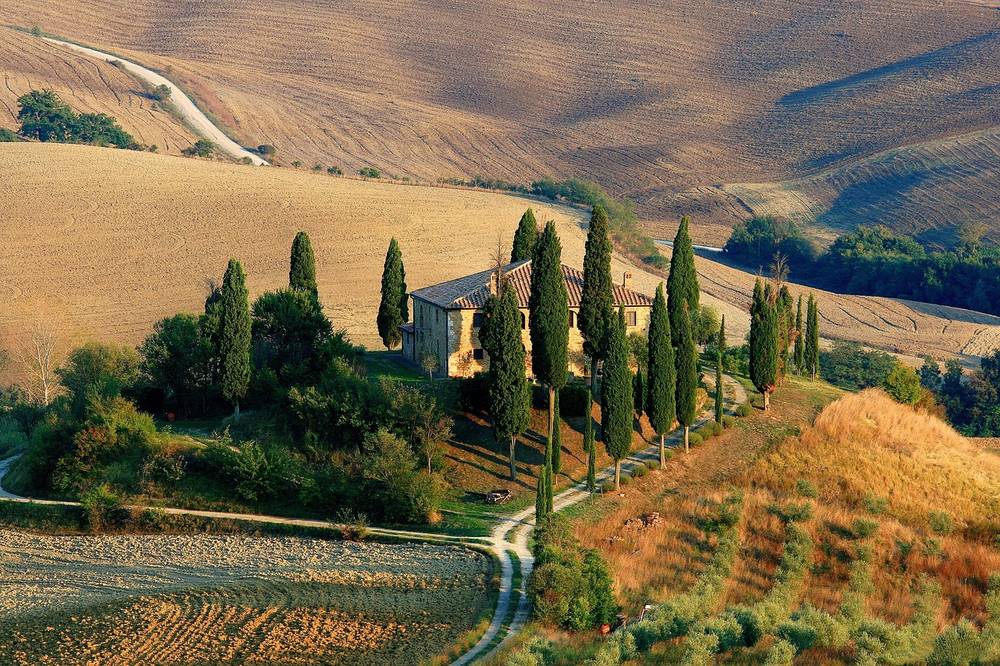
Buying property in Tuscany has attracted foreign buyers for decades, and with good reason. Extraordinary landscapes, a rich cultural heritage, and excellent food and wine all play a part. Well-connected infrastructure adds to the appeal too, making it one of the most liveable regions in Italy. For international buyers, it also offers a well-developed property market that both sides, buyers and sellers, tend to understand.
That familiarity does not eliminate the legal complexity that comes with any Italian property purchase, though. This guide covers what foreign buyers need to know before buying in Tuscany.
The Tuscan Property Market: What to Expect
Tuscany remains the most searched Italian region by international buyers. It accounts for over 15% of all property searches by foreigners on Italian portals. It is also, unsurprisingly, one of the most expensive. The most sought-after areas include the Chianti hills between Florence and Siena, the Val d’Orcia, the coastal Maremma, and the area around Cortona and Montepulciano. Prices there run significantly higher than in comparable rural locations elsewhere in Italy.
That said, Tuscany is a large and varied region. You can still find genuine value in less fashionable inland areas, or in smaller towns away from the main tourist routes. Properties needing renovation also offer good value. The range is wide: from modest apartments in historic town centres to large wine estates and luxury farmhouses.
The market is also competitive. Well-priced properties in desirable locations sell quickly. Buyers who are not properly prepared can find themselves losing properties they wanted to buy. This applies particularly to those without financing in place or without legal advice to hand.
Where to Buy: Main Areas
Florence and its surroundings offer a strong market for apartments, particularly in the historic centre. Prices run high and keep rising, driven by both residential and investment demand. The surrounding hills, Fiesole, Settignano, the Chianti, offer rural properties within easy reach of the city.
The Chianti represents the classic Tuscan landscape between Florence and Siena. Demand runs high here, prices run high too, and a well-established community of international residents calls it home. Farmhouses and wine estates here command premium prices and attract keen competition.
Siena and the Val d’Orcia form arguably the most visually iconic part of Tuscany. Buyers who want the quintessential Tuscan landscape seek out properties here. The Val d’Orcia holds UNESCO World Heritage status, which adds both prestige and planning constraints.
Cortona, Montepulciano, and Montalcino are hill towns with strong international profiles and a mix of urban and rural properties. Prices vary considerably depending on condition and proximity to town centres.
The Maremma covers Tuscany’s coastal and hinterland area. It remains less developed and less expensive than the inland classics. Growing interest comes from buyers who want value without sacrificing the Tuscan lifestyle.
Lunigiana forms the northernmost part of Tuscany, bordering Liguria and Emilia-Romagna. It has become one of the fastest-growing areas for international buyer interest. Prices here run significantly lower than in the more established zones.
Key Legal Considerations
The legal framework for buying property in Tuscany matches the rest of Italy. But several issues arise with particular frequency in this market.
Rural and agricultural properties carry specific complexities. Italian planning rules classify many of the most desirable Tuscan properties, farmhouses, poderi, case coloniche, as agricultural land. This has important implications for what you can build, extend or convert. Strict limits govern additions to existing structures. Any works carried out without proper authorisation create liabilities that transfer to the buyer at completion. A thorough check of the planning history of every structure on the property is essential before committing to a purchase. This mirrors the approach needed when buying a masseria in Puglia, another region with significant rural property stock.
Landscape and heritage constraints affect large parts of the region. National and regional legislation places landscape protection constraints (vincoli paesaggistici) on much of Tuscany. In areas like the Val d’Orcia, a UNESCO World Heritage Site, these constraints run particularly stringent. They can affect renovation plans, external modifications, and even the colours of exterior surfaces. Buyers who intend to make significant changes to a property need to verify what is permissible in that specific location. Do this before making an offer.
Pre-emption rights (diritto di prelazione) catch many buyers by surprise. This specific legal issue arises frequently in Tuscan agricultural property purchases. Under Italian law, neighbouring agricultural landowners and tenant farmers may hold a right of first refusal (prelazione agraria). This applies over the sale of agricultural land. If a seller fails to properly notify those with pre-emption rights, those parties may step in later. They can then acquire the property at the same price within a set period after completion. Verifying and managing pre-emption rights forms an essential part of due diligence for any rural Tuscan purchase.
Title and inheritance history also deserve attention. Properties that have stayed in Tuscan families for generations often carry complex ownership histories. Successive inheritances, co-ownership by multiple heirs, and informal arrangements never properly formalised are all common. Verifying that all co-owners have consented to the sale, and that the title is clean, requires careful investigation.
Renovation and Planning
Many buyers in Tuscany purchase properties that need renovation, either cosmetic updating or more substantial structural works. Before purchasing, check a few things first. Confirm that all existing structures are lawfully built and match the cadastral plans. Establish what planning permission the intended works will require, and whether authorities are likely to grant it. Check whether the property carries any landscape or heritage constraints that would limit what you can do. Finally, get a realistic sense of the cost and timeline for the works.
Renovation in Tuscany can be rewarding, but it is rarely straightforward. Labour costs, material availability, permit timelines and the requirements of local authorities all need factoring in. Obtain independent professional assessments before making a firm offer. Use a geometra or architect familiar with local rules.
Costs to Budget For
The purchase costs for a property in Tuscany match the rest of Italy. Registration tax runs at 9% of the cadastral value for non-primary residences. The rate drops to 2% with the first home benefit (agevolazione prima casa), provided the buyer establishes Italian residence within 18 months. Notary fees typically run 1 to 2% of the purchase price. Legal fees cover independent legal assistance throughout the transaction. Surveyor’s fees matter particularly for rural properties and those requiring renovation.
For rural properties with agricultural land, additional costs may arise. These connect to the pre-emption rights process and any necessary regularisation of planning issues identified in due diligence.
How We Can Help
Magaraggia Law Firm assists international buyers at every stage of the Italian property transaction, including in Tuscany. Our role is not limited to reviewing documents. We manage the entire process on your behalf. This spans the initial legal due diligence on the property, negotiating with the seller and the estate agent, and coordinating with the notary through to completion. Our objective is to protect your interests at every step and to eliminate legal and financial risk as far as possible. We advise in English, French and Spanish, and we work across all of Italy.
If you are considering buying property in Tuscany, contact us for a free initial consultation:
info@studiolegalemagaraggia.it
+39 328 071 0278